
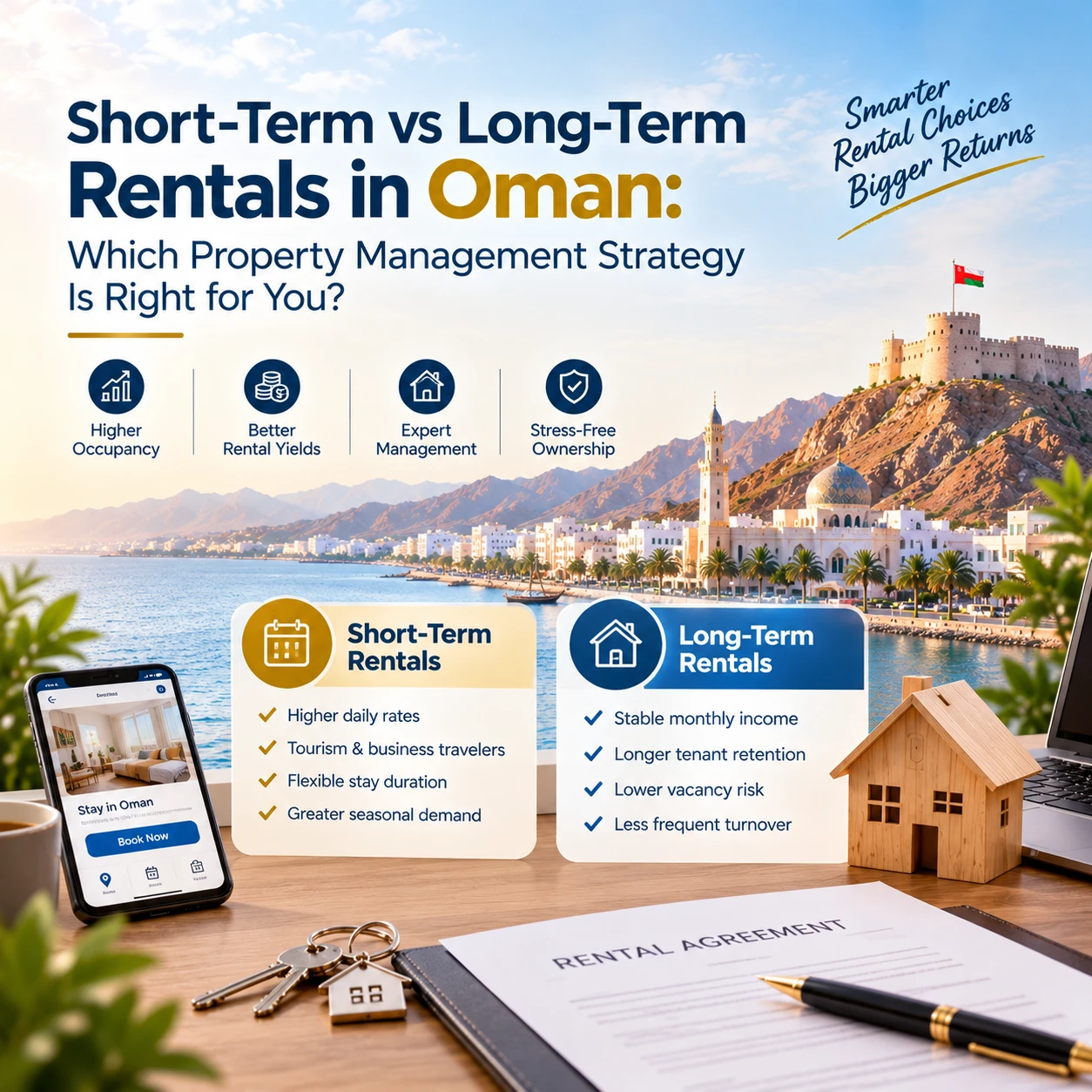
Short-Term vs Long-Term Rentals in Oman: Which is Right for You?
Oman’s real estate market offers both vacation (short-term) and traditional (long-term) rental opportunities for property owners. Short-term lets can yield higher nightly rates but require active management, professional licensing and often fall under new tourism regulations. Long-term rentals offer steadier income with lower management overhead but involve fixed-monthly rents and formal lease registration. In 2026, Oman is actively legalising and regulating short-term rentals to boost tourism. Property owners must consider local rules (e.g. Muscat requires registering any lease with a 3% fee) and weigh the pros and cons of each strategy before deciding which suits their goals.
Short-Term vs Long-Term: Key Differences
- Duration & Occupants: Short-term rentals (often marketed on platforms like Airbnb or Booking.com) are typically let by the day or week, targeting tourists, business travelers or visiting family. Long-term rentals are usually 6–12+ month leases with tenants such as expat professionals, local families or company-assigned employees.
- Rates and Income: Short-term lets can charge higher per-night rates (especially in high season) but have more downtime between bookings. Long-term lets provide stable monthly income at negotiated rents.
- Management Intensity: Short-term rentals need frequent cleaning, guest support, dynamic pricing and marketing. Long-term rentals require less day-to-day work – a tenant signs a lease, pays rent monthly, and the landlord handles occasional maintenance or turnover at lease-end.
- Legal Formalities: Short-term rentals in Oman are becoming regulated under tourism laws. Long-term rentals are governed by the rental law (Royal Decree 6/89 as amended) and typically require a formal contract that landlords register with the municipality (Muscat’s online system charges 3% of monthly rent).
Oman-Specific Context and Regulations
Oman’s government has taken a proactive, “pro-professional” approach to short-term rentals. In September 2025, OMRAN (the state tourism company) led a $7 million initiative to develop Oman’s newly legalised short-term rental market. Under this framework, short-term lets are being rolled out in stages:
- Integrated Tourism Complexes (ITCs): Large developments (often government-backed) can obtain 5-year short-term rental licenses. These zones allow freehold ownership by foreigners and will host most early short-stay rentals.
- Professional Operators: Real estate management firms running multi-unit portfolios (e.g. apartment blocks) can manage short-term lets under license.
- Individual Hosts: Finally, individual owners may be allowed to host guests, but only after meeting strict professional licensing and quality standards.
This means that in Oman, short-term renting will generally require using a licensed operator or development in an approved zone. In contrast, long-term rentals follow the usual landlord-tenant law. Tenants (Omani or expatriates with valid residency) sign one-year leases commonly, and landlords must register the lease contract as above. The rental law covers security deposits, tenant obligations and dispute resolution (e.g. a rental dispute committee or courts if needed).
Oman is positioning STRs as a government-backed tourism growth engine… with professionals, not hobbyists, in the driver’s seat”. For property investors, this means any short-term rental venture should factor in these new regulations and possibly partner with licensed local managers.
Pros and Cons of Short-Term Rentals in Oman
Pros:
- Higher Potential Income: Nightly rates can far exceed pro-rated long-term rent, especially during peak tourist seasons.
- Flexibility: Owners can use the property when empty and adjust pricing for demand.
- Tourism Demand: Oman’s growing tourism (and government support) may keep demand for quality vacation rentals strong.
- Professional Support: Under Oman’s model, partnering with agencies can ensure property is well marketed on global platforms and meet guest expectations.
Cons:
- Regulatory Approval Needed: Only properties in approved zones (ITCs) or managed by licensed operators can legally offer short-term stays. Individual Airbnb hosting is not yet generally allowed.
- High Turnover Workload: Frequent guest check-ins/check-outs mean more cleaning, linen, guest communication, and booking management.
- Seasonality & Vacancy: Off-season periods or unforeseen closures (e.g. travel restrictions) can leave the property empty.
- Wear and Tear: More intensive use by transient guests can lead to faster maintenance needs.
- Equipment and Fitting Costs: Short-term rentals must be fully furnished and equipped (and often maintain hotel-like amenities), raising upfront costs.
Pros and Cons of Long-Term Rentals in Oman
Pros:
- Steady Income: One tenant signs a one-year (or multi-year) lease at a fixed monthly rent, giving predictable cash flow.
- Lower Operational Effort: Once a lease is signed and initial checks done, day-to-day involvement is low (aside from occasional repairs).
- Legal Clarity: Lease agreements are clearly defined under Omani law, and landlords can register the contract with the authorities (e.g. Muscat’s online service).
- Lower Turnover: Longer tenancy means less frequent vacancy periods and advertising costs.
Cons:
- Lower Rent Yield: Monthly rent may be lower than potential short-term revenue, especially in tourist hotspots.
- Less Flexibility: Property is locked up with one tenant; you cannot adjust rent more than contract terms until renewal.
- Tenant Risk: There is risk of non-payment or dispute. Oman’s law provides recourse, but eviction can be slow.
- Furnishing/Utilities: If rented furnished, owners still incur costs. Unfurnished rentals may attract less or lower-paying tenants.
- Contract Formalities: Landlords must register the lease (and pay 3% of monthly rent) and abide by any rental law provisions on maintenance and termination.
Investor Comparison Table
| Rental Type | Typical Tenants | Average Management Tasks | Expected Occupancy | Typical Income Drivers | Key Risks | Best For |
|---|---|---|---|---|---|---|
| Short-Term | Tourists, business travelers, vacationers | Frequent cleaning and turnover; guest communications; online marketing; dynamic pricing; check-in coordination | Variable (often 60–80% annually, depending on season) | High nightly/weekly rates; peak-season pricing; cleaning fees | Regulatory compliance (licenses); seasonality; property wear; high vacancy downtime | Owners near tourist hubs/ITCs who want higher yields and can manage active rentals |
| Long-Term | Local families, expatriate professionals, company-leased tenants | Tenant screening; lease signing and registration; monthly rent collection; occasional maintenance; contract renewals | High (95%+ if leased, with brief vacancy between tenants) | Stable monthly rent; annual rent increases; minimal vacancy loss | Rent defaults; tenant turnover costs; rental market fluctuations (long-term) | Investors seeking steady income and minimal daily oversight |
Step-by-Step Checklist for Property Owners
- Prepare the Property: Clean thoroughly and make needed repairs. For short-term lets, fully furnish and equip the home (furniture, linens, kitchenware, internet, etc). For long-term rentals, decide if the property is furnished or unfurnished and ensure all major systems work.
- Understand Legal Requirements: If renting short-term, verify that your property is in an eligible area (e.g. an ITC) and that you partner with a licensed operator. For long-term rentals, draft a clear lease contract and plan to register it (e.g. via Muscat Gov.om). Ensure compliance with landlord-tenant laws (Royal Decrees) concerning deposit and eviction rules.
- Set Competitive Pricing: Research similar rentals in your area. Short-term rents fluctuate with season – use online market tools or local agents to set nightly rates. For long-term rent, check average monthly rates for similar apartments/villas nearby and consider any utilities or amenities included.
- Advertise Your Listing:
- Short-Term: List on vacation rental platforms (Airbnb, Booking.com, local booking sites). Use high-quality photos and highlight unique features (view, pool, accessibility to attractions).
- Long-Term: Advertise via real estate portals, social media, local newspapers, or through agents.
- Screen Guests/Tenants:
- Short-Term: Communicate with potential guests via the platform, check reviews, and clarify house rules. Use a rental agreement or platform terms. Consider identity verification if available.
- Long-Term: Collect copies of tenant IDs/visas, proof of employment or income. Check references or previous landlord feedback if possible.
- Collect Payments and Deposits:
- Short-Term: Platforms handle payments. Charge a damage/security deposit via the platform if possible.
- Long-Term: Collect first month’s rent and a security deposit (commonly one month’s rent) before handing over keys. Issue receipts.
- Maintenance and Cleanliness: Keep the property clean and in good repair. For short-term, schedule cleanings between stays and replenish supplies (toilet paper, toiletries). For long-term, agree on a maintenance plan (who handles small repairs, etc.).
- Monitor Occupancy and Adjust Strategy: Track your booking calendar or tenant status. If short-term occupancy is low, consider adjusting prices or marketing channels. If long-term, be prepared to re-rent promptly when a lease ends.
- Renew or Reinvest: For long-term tenants, negotiate renewals in advance. For short-term, update your listing to highlight new photos or amenities. Decide if selling the property or refinancing is beneficial based on performance.
Frequently Asked Questions
Q1: Do I need a license to do short-term rentals in Oman?
Yes. Oman has started licensing vacation rentals. Currently only units in Integrated Tourism Complexes (ITCs) or managed by professional companies can get short-term rental licenses. Individual home-sharing (like an unregistered Airbnb) is not yet permitted. Expect to need official approval or to list via a licensed property manager.
Q2: Can foreigners rent out property in Oman?
Foreign nationals can own property in ITCs (freehold) or hold a long lease outside them. They may rent to tenants just like Omani owners. For short-term letting, a foreign owner must still be in an approved zone or use a licensed operator. Long-term rental by foreigners follows normal lease rules; there’s no restriction on renting, though any lease should be registered.
Q3: How long are typical leases in Oman?
Most rental contracts in Oman are one year with automatic annual renewal. Some landlords offer shorter (e.g. 6-month) or longer terms. By law, leases must be put in writing and it’s best to register them to avoid disputes. Rent increases are usually negotiated at renewal, not capped by law.
Q4: What fees do landlords pay on rental income?
There is no personal income tax on rental earnings for individuals in Oman. However, landlords must register leases with the municipality (for example, Muscat charges a fee of 3% of one month’s rent). Short-term operators may also pay tourism licensing or fees under ITC rules. If you use a property manager, they will charge management fees (often a percentage of rent or a fixed service fee).
Q5: Which strategy (short vs long) is better for investors?
It depends on your goals. Short-term lets can generate higher gross income, but they require more work and compliance with tourism rules. Long-term rentals give stable, “hands-off” income but usually at lower yields. Consider location and clientele: A furnished apartment in a tourist-frequented ITC might do well as a vacation rental, whereas a quiet villa in a residential area may be more suited for a family on a yearly lease.
Q6: How do I find tenants or guests in Oman?
For short-term, online platforms (Airbnb, Booking.com, local vacation rental sites) are popular. Good photos and prompt communication are key. For long-term rentals, local real estate websites (like propertyfinder.om or olx.om), word-of-mouth, classified ads, and real estate agents are common. Network in expat communities or corporate housing circles too.
Q7: What happens if a tenant stops paying rent?
Under Omani law, you can file a rental dispute with the official Rental Dispute Committee or court. The recent legal reforms (RD 12/2025) updated eviction and dispute rules, but the process can still be slow. To minimise risk, always collect a security deposit (usually one month’s rent) and consider tenants’ job stability. For short-term rentals, platforms typically hold the funds until guests check out, reducing payment risk.
Next Steps
Choosing between short-term and long-term rentals in Oman depends on your property, resources and risk tolerance. Short-term vacation rentals offer higher potential income but require complying with new tourism licensing (focused on professional management and ITCs). Long-term rentals offer steady revenue with fewer daily demands, subject to lease registration (3% fee) and Oman’s landlord-tenant laws.
Regardless of strategy, start by analyzing the local market: look at comparable listings, understand occupancy rates, and ensure you meet all legal requirements. If you’re new to rental management, consult experts or consider hiring a property manager to handle contracts, maintenance and guest relations.
Looking for professional property management in Oman? ESCROW GROUPS offers property investment, construction and management services tailored for Oman’s market. Contact us to discuss how we can help maximise your rental returns and ensure compliance with local regulations.
Looking for Reliable Property Management in Oman?
ESCROW GROUPS supports property owners with property-related services, including investment, construction and property management. Contact our team to discuss your property’s requirements.
Visit: https://escrowgroups.net/
